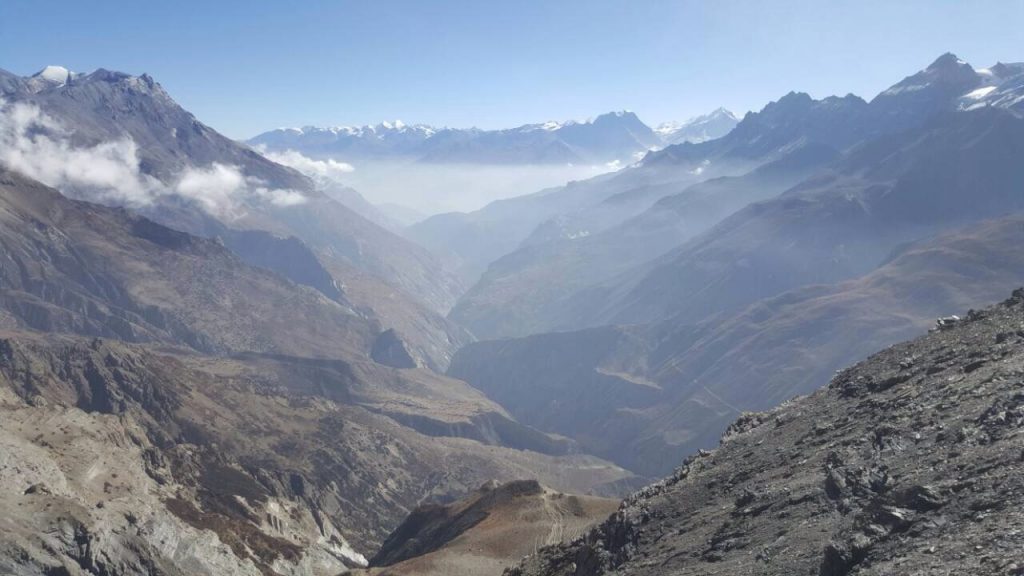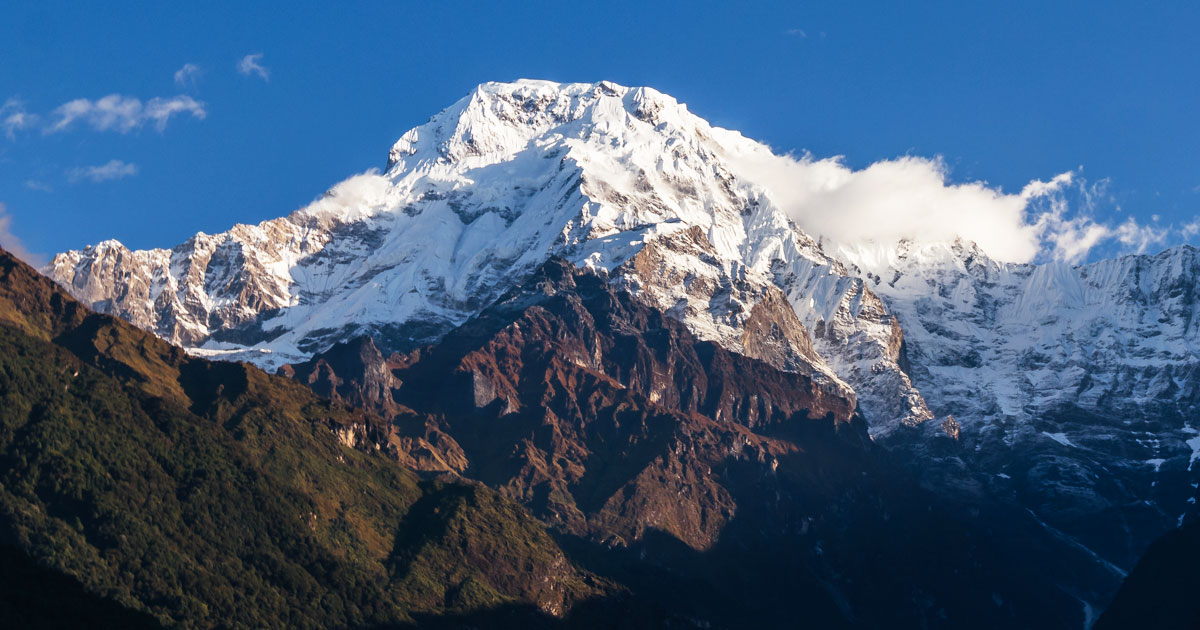
Upper Dolpo Trek wide mountain valley
Remote & Off-Beaten Region

Upper Dolpo Trek

Difficulty Challenging to Strenuous
Duration 24 Days
Max. Altitude 5,110 m/16,765 ft
Best Season Mid-April to May, Sep-Oct
Lodging & Meals Tea house, lodge & camping

Upper Dolpo

A remote 24-day trans-Himalayan trek linking Phoksundo Lake, Shey Gompa, high passes above 5,000 meters, and some of Nepal's most intact Tibetan-influenced culture.

Upper Dolpo Trek is one of Nepal's most demanding classic treks. Most itineraries begin with flights from Kathmandu to Nepalgunj and on to Juphal, then follow the Lower Dolpo approach through Dunai, Chhepka, and Ringmo before entering the restricted Upper Dolpo section.

The standard commercial route then continues toward Phoksundo, Shey Gompa, Namgung or Namduna Gaun, Saldang, Yangze Gompa, Jeng La, and Dho Tarap. Camp names and village order vary slightly by operator, but the classic trip is usually 24 days and tops out at about 5,110 meters.

Permit rules are one reason the trek is expensive and tightly managed. Nepal Tourism Board and the Department of Immigration currently list Upper Dolpa at USD 500 per person for the first 10 days and USD 50 per day beyond that, while the Lower Dolpa permit is charged separately at USD 10 per week.

This route suits experienced trekkers who are comfortable with flight delays, multiple nights above 4,000 meters, limited services, and a mix of tea houses and camping support. If you want a less commercial trek with real cultural depth, Upper Dolpo remains one of Nepal's standout expeditions.
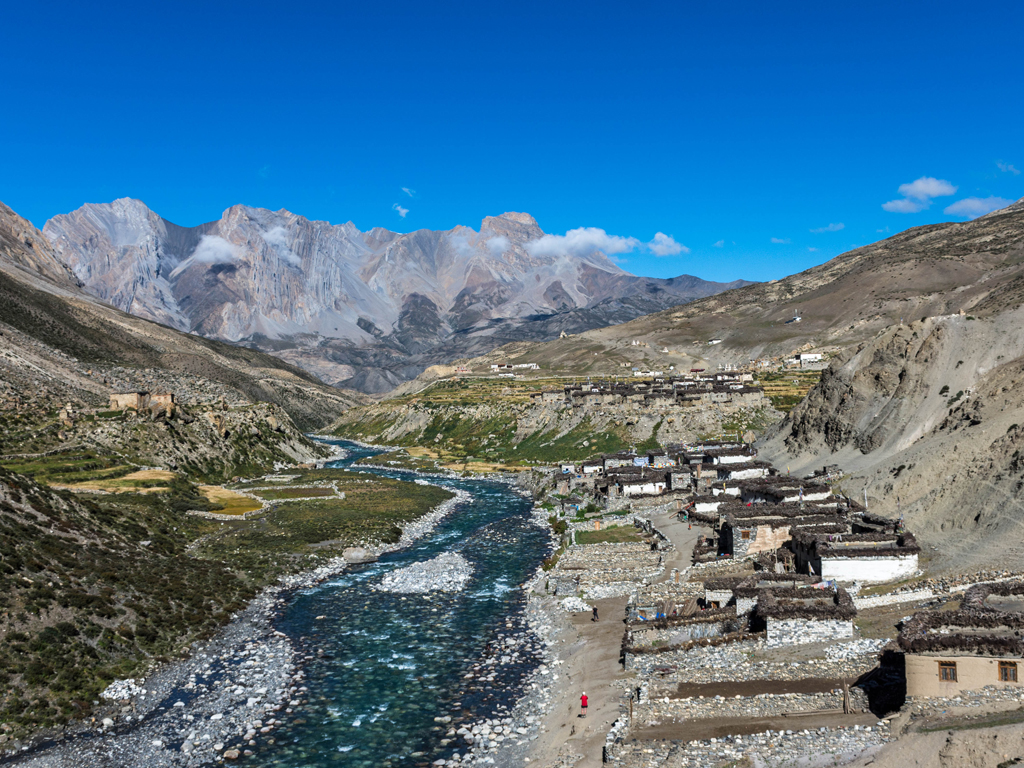
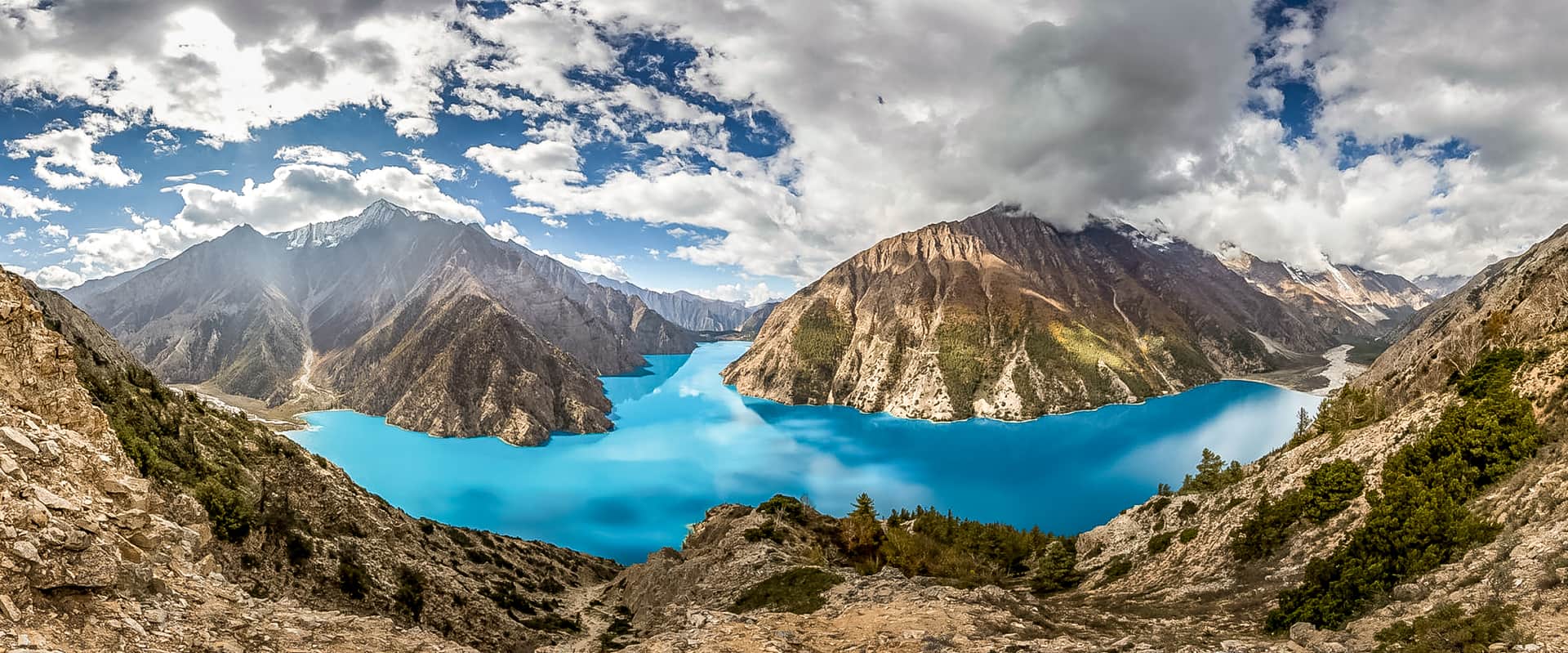
Upper Dolpo Trek landscape view
Signature Experiences

Expedition Highlights

01

Enter Nepal's restricted Inner Dolpo, where travel must be arranged through a registered trekking agency.

02

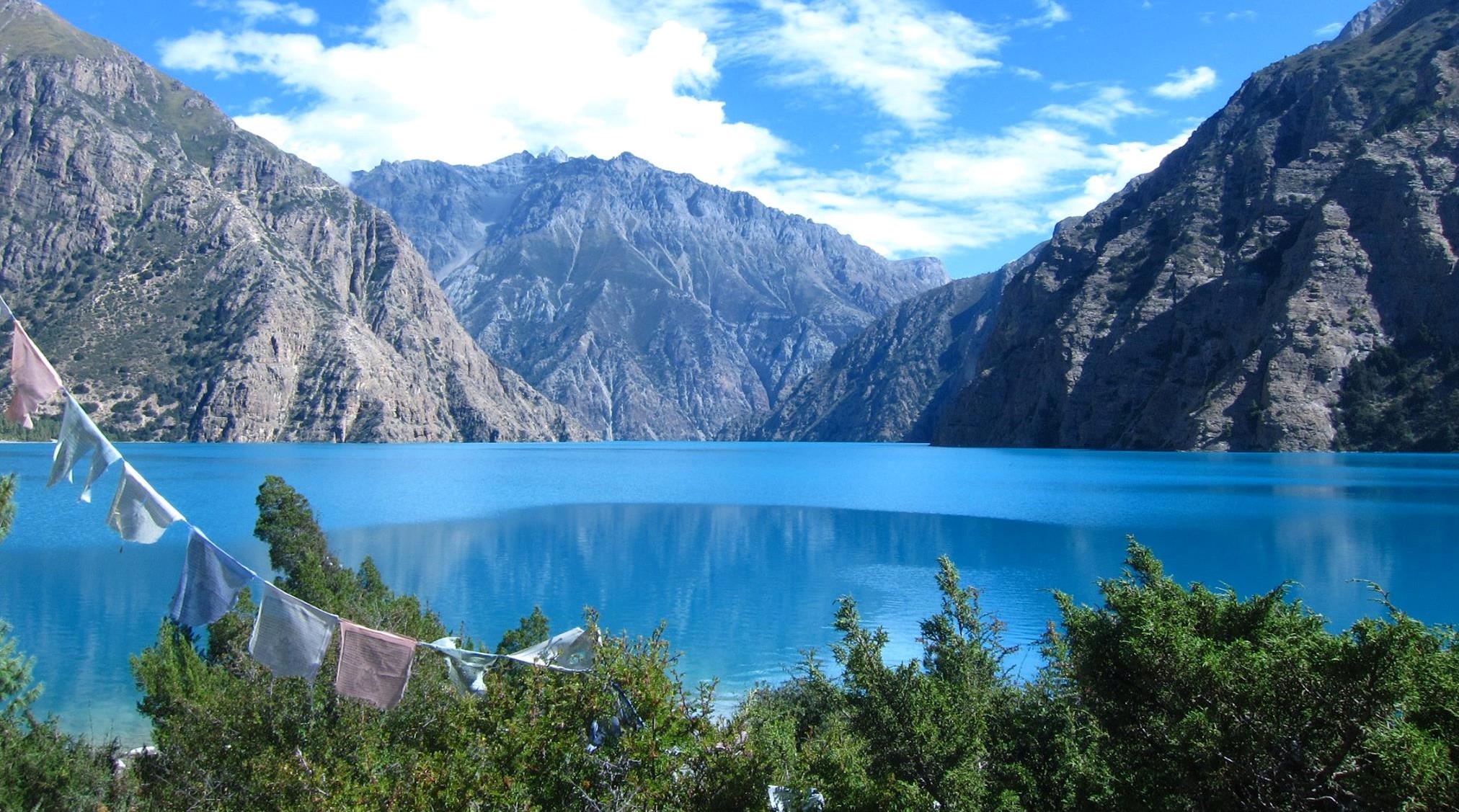
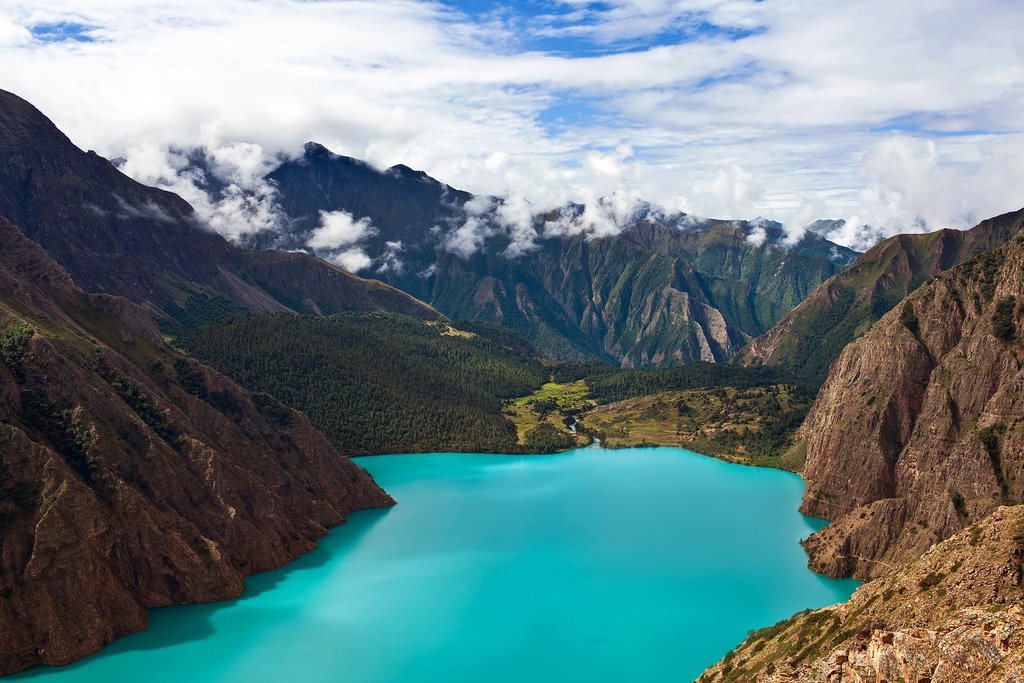
Reach turquoise Phoksundo Lake inside Shey Phoksundo National Park, Nepal's largest national park at 3,555 sq km.

03

Cross major passes on the classic route, including Kang La/Nangdalo La at about 5,110 m and Jeng La at about 5,090 m.

04

Visit Ringmo, Shey Gompa, Saldang, Yangze Gompa, and Dho Tarap, key settlements of Upper Dolpo's Tibetan-influenced culture.

05

Trek through a rain-shadow landscape where spring and autumn are best, with some summer departures also possible.

Trail Logs & Itinerary

1
Arrival Day Elev: 1,300 m

• Welcome upon arrival at Tribhuvan International Airport in Kathmandu.
• Private transfer to hotel; trek briefing, document check, and gear preparation.
• Free evening to explore vibrant local markets in Thamel.

2
Scenic Flight

• Trail route: Fly to Nepalgunj.
• Fly to western Nepal and prepare for the Juphal mountain flight.
• Arrive at Nepalgunj; evening dinner and restful overnight stay.

3
Scenic Flight & Trek

• Trail route: Fly to Juphal and trek to Dunai/Suligad.
• Fly to Juphal, then begin trekking on the Lower Dolpo approach toward Dunai or Suligad, depending on the operator's exact camp plan.
• Arrive at Dunai Suligad; evening dinner and restful overnight stay.

4
Trekking Day

• Trail route: Trek to Chhepka.
• Follow the Suligad valley through forest and river gorge terrain.
• Arrive at Chhepka; evening dinner and restful overnight stay.

5
Trekking Day

• Trail route: Trek to Jharana Hotel/Reji.
• Continue upward through cedar and pine forest toward the upper valley camps.
• Arrive at Jharana Hotel Reji; evening dinner and restful overnight stay.

6
Trekking Day

• Trail route: Trek to Ringmo and Phoksundo Lake.
• Reach Ringmo and Phoksundo Lake, the turquoise landmark that defines many Dolpo journeys.
• Arrive at Ringmo and Phoksundo Lake; evening dinner and restful overnight stay.

7
Acclimatization Day

• Active acclimatization hike to elevated ridge viewpoints around at Phoksundo Ringmo.
• Breathtaking 360-degree mountain panoramas and exploration of local culture.
• Restful afternoon, hydration, and leisurely walk around the settlement.

8
Trekking Day

• Trail route: Trek to Sallaghari or Phoksundo Khola.
• Leave the lake basin and move into a drier, more alpine landscape.
• Arrive at Sallaghari or Phoksundo Khola; evening dinner and restful overnight stay.

9
Trekking Day

• Trail route: Trek to Phoksundo Bhanjyang/Nangdalo base.
• The route steepens as you climb toward the main high-pass approach camp.
• Arrive at Phoksundo Bhanjyang Nangdalo base; evening dinner and restful overnight stay.

10
Trekking Day Elev: 5,110 m

• Trail route: Cross Kang La or Nangdalo La (about (5,110 m) to Shey Gompa.
• One of the biggest days of the trek, crossing the route's usual high point before descending to Shey Gompa.
• Arrive at Shey Gompa; evening dinner and restful overnight stay.

11
Trekking Day

• Trail route: Explore Shey Gompa.
• Spend time in the sacred Shey basin and around the historic monastery.
• Arrive at Shey Gompa; evening dinner and restful overnight stay.

12
Trekking Day

• Trail route: Cross Saldang La/Shey La to Namgung or Namduna Gaun.
• Cross another pass and descend to one of Upper Dolpo's culturally important villages.
• Arrive at Namgung or Namduna Gaun; evening dinner and restful overnight stay.

13
Trekking Day

• Trail route: Trek to Saldang.
• Reach Saldang, one of the largest and most important settlements in Upper Dolpo.
• Arrive at Saldang; evening dinner and restful overnight stay.

14
Trekking Day

• Trail route: Trek to Yangze Gompa.
• Make the side trip or onward walk to Yangze Gompa, another major religious site in the region.
• Arrive at Yangze Gompa; evening dinner and restful overnight stay.

15
Trekking Day

• Trail route: Trek to Sibu/Shibu.
• Return from the Yangze side and continue toward the Jeng La approach.
• Arrive at Sibu Shibu; evening dinner and restful overnight stay.

16
Trekking Day

• Trail route: Trek to Jeng La Phedi.
• Climb to the base camp area below Jeng La for the next morning's crossing.
• Arrive at Jeng La Phedi; evening dinner and restful overnight stay.

17
Trekking Day Elev: 5,090 m

• Trail route: Cross Jeng La (about (5,090 m) to Dho Tarap.
• Cross the pass and descend into Dho Tarap, one of Dolpo's best-known villages.
• Arrive at Dho Tarap; evening dinner and restful overnight stay.

18
Acclimatization Day

• Active acclimatization hike to elevated ridge viewpoints around Dho Tarap.
• Breathtaking 360-degree mountain panoramas and exploration of local culture.
• Restful afternoon, hydration, and leisurely walk around the settlement.

19
Trekking Day

• Trail route: Trek to Tarap Khola.
• Start the long descent through the Tarap valley and gorge.
• Arrive at Tarap Khola; evening dinner and restful overnight stay.

20
Trekking Day

• Trail route: Trek to Khanigaon.
• Continue downstream through narrower canyon terrain and lower settlements.
• Arrive at Khanigaon; evening dinner and restful overnight stay.

21
Trekking Day

• Trail route: Trek via Tarakot to Dunai.
• Rejoin the main lower valley route and return to Dunai.
• Arrive at Dunai; evening dinner and restful overnight stay.

22
Trekking Day

• Trail route: Trek to Juphal.
• Complete the walking section and overnight near the airstrip.
• Arrive at Juphal; evening dinner and restful overnight stay.

23
Scenic Flight

• Trail route: Fly Juphal to Nepalgunj to Kathmandu.
• Weather permitting, connect back through Nepalgunj to Kathmandu.
• Arrive at Kathmandu; evening dinner and restful overnight stay.

24
Departure Day

• Leisure breakfast at hotel; free time for last-minute souvenir shopping.
• Optional exploration of Kathmandu's historic Durbar Squares.
• Private transfer to Tribhuvan International Airport for your departure flight.

Inclusions

  • Airport pick-up and drop-off in Kathmandu.
  • Hotel nights in Kathmandu plus domestic flight coordination via Nepalgunj and Juphal.
  • Upper Dolpo and Lower Dolpo permit processing through a registered trekking agency.
  • Licensed guide support for the full trek, as required for restricted-area travel.
  • Camping setup with shared tents and kitchen support where lodge infrastructure is limited.
  • Breakfast, lunch, and dinner during the trekking section.
  • Experienced trekking guide, porters, and support staff.
  • Tea house or simple lodge stays on lower sections, with camping or basic local accommodation deeper in the route.
  • Staff wages, meals, insurance, and operational expenses.
  • Upper Dolpo Restricted Area Permit: USD 500 for the first 10 days, then USD 50 per day beyond that.
  • Lower Dolpo permit for the approach section: USD 10 per week per person.
  • Shey Phoksundo National Park entry permit and related local paperwork.
  • Juphal flights often shift due to weather, so a time buffer is smart.
  • Independent trekking is not allowed in the restricted Upper Dolpo section.
  • Charging, hot showers, and food variety become much more limited once you move beyond the lower approach villages.

Exclusions

  • International flights to and from Nepal.
  • Nepal visa fees and personal travel expenses in Kathmandu.
  • Personal trekking gear, clothing, sleeping bag, and other equipment.
  • Travel insurance with high-altitude rescue coverage.
  • Personal snacks, drinks, tips, charging, hot showers, and private room upgrades.

Frequently Asked Questions

Yes. Unlike popular regions like Everest or Annapurna, remote regions (like Manaslu, Dolpo, or Kanchenjunga) have simpler teahouses or require camping. Facilities are basic, featuring shared squat toilets and limited hot water.
Many remote borders require Restricted Area Permits (RAPs) and must be hiked with a registered guide and a minimum of two trekkers. Our agency handles all permit processing for you.
Charging is mostly solar-powered and available at lower teahouses for a fee. Wi-Fi is rare or non-existent in remote villages. We recommend bringing a high-capacity power bank and a local SIM card.
The trails are less developed, more rugged, and see very few tourists. You should expect steep ascents, high mountain passes (like Larkya La at 5,106m), and long walking days over challenging terrain.
Since there are absolutely no ATMs in remote regions, you must withdraw sufficient cash in Nepalese Rupees in Kathmandu. We recommend budgeting at least 2,500 Rupees ($20 USD) per day for personal expenses.
You should pack high-quality gear: a warm sleeping bag (rated to -15°C), broken-in trekking boots, thermal layers, water purification tools, basic toiletries, and a small personal first-aid kit with altitude medication.